
How to spontaneously combust
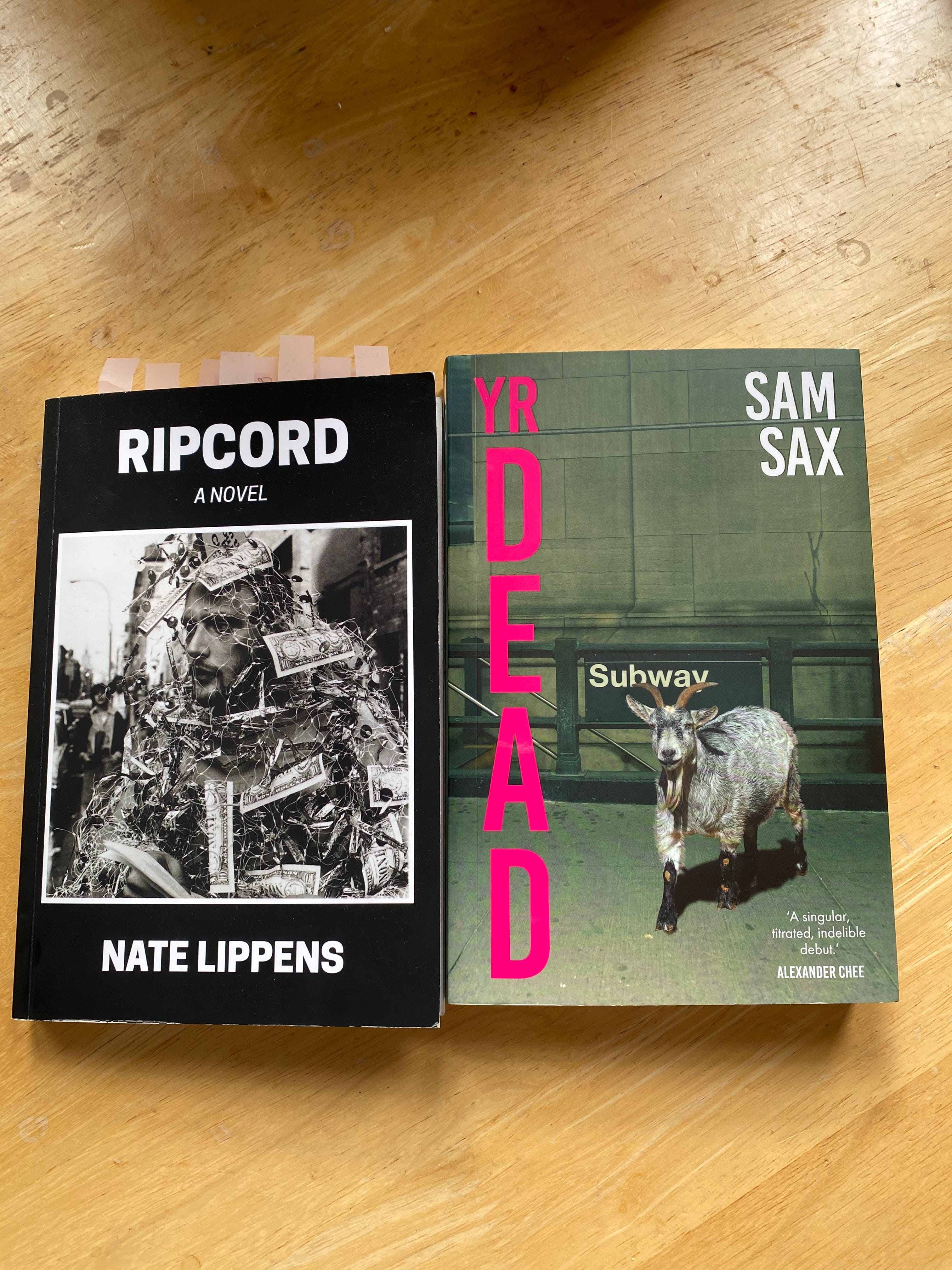
On Sam Sax and Nate Lippens
CW: suicide, abusive relationship dynamics
I don’t know where I first heard the word, but when I was younger, ‘spontaneous combustion’ sounded like the most fairytale thing that could happen to a person in real life. On a par with ‘defenestration’, the word that was attached to the thing, the process, was magical, adorning pain with fantasy through multiple syllables. But also, how could something just set itself alight? Literally how does that happen? I couldn’t imagine it; in my limited city kid way, I knew there was no smoke without fire, no flames without a spark.
There are certain types of plants that can spontaneously combust. Cistus is one: a perennial flowering shrub most commonly found in the Mediterranean, Middle East and Canary Islands. There are species of Cistus that can emit oils that make the plants flammable; when the temperature climbs above 32 degrees Celsius, the plants may spontaneously combust. Their seeds are fire-resistant, so this evolutionary move is tactical: once they combust, the fires consume other competing species, allowing the Cistus to then germinate and flourish when the flames die down, more room for them now.
I have been growing a eucalyptus seedling on my windowsill that S gave me in the summer. When he gave it to me, he laughingly warned me that eucalyptus plants are also self-combusting. I fretted all summer long that the refracted heat and rays on my exposed windowsill, combined with the growing reserves of flammable oils collecting inside the plant, would eventually reach such a point of concentration that my seedling would also spontaneously combust, taking my home and everything I love with it. I only recently found out that they are not self-combusting, but the shadow of the worry remains.
What can drive a person to self-immolate? Another word that feels spell-like in how far away the word feels from its own concrete reality: ‘immolation’, it almost sounds like it could be a beauty procedure. This is the central question of Sam Sax’s debut novel Yr Dead. Some point in 2016, our narrator Ezra makes their way to Trump Tower in New York to set themselves on fire, a final act of protest. As the flames collect around them, as they are treated by the paramedics, their life plays before their eyes in flashes and moments, so that Yr Dead is a queered Bildungsroman, fragmented and driving towards one closed end instead of open possibility and self-assuredness.
Ezra is queer and Jewish; their father, grieving the abandonment of their family by their mother, decides at a certain point to move into an old elementary school with other Jewish men, retreating into religion, adopting Yiddish words into his vocabulary where before there was just a thick Queens accent. Ezra recounts this, alongside their work at a used bookstore, visits to categorise the libraries of dead people, failed relationships, distanced friends. The intimacies and mundanities of their life are told alongside the deaths of various animal species, the 2016 presidential campaign, news stories reporting world and natural disasters, various protests against various causes. They find themselves at home in protests and marches, and they start going on their own to feel company, but quickly feel disillusioned at how little difference they’re able to make. They occasionally text their college friend Ericka, small bursts of derision and distance from the world surrounding them. They exchange jibes as affection, these contempts traded as rope that both binds them and keeps them from really touching each other.
The moment and aftermath of the fire punctuate the book in flashes of sensory overload: the paramedic speaking softly to them as they lie in the back of an ambulance; the spark. Between these, Sax leaves you searching for one inciting moment, one trigger that could have led Ezra to make such an extreme exit. Yes, their mother leaves them. Yes, their childhood love dies. Yes, their father gets more and more extreme in his religious views. But these aren’t triggers, they are slow burns. Ezra takes on their mother’s viewpoint towards the end, showing her side of the sudden exit. Their childhood sweetheart dies, but he could never really allow himself to be with Ezra, leaving Ezra to puzzle over the suggestions of more. Their father’s cloistering in religion is a process that takes years, a protracted grief response.
Is it being locked in a cupboard for two days by an abusive boyfriend that does it? Not even. These events have played out in Ezra’s life long before they decide to walk themselves to Trump Tower and set themselves alight. The sheer accumulated mass of ongoing quotidian misery and daily strife that Ezra accumulates is enough to protest against. Sam Sax is asking, must it always be like this?
It’s a difficult book to read, but also I read it in a single day, entranced by Sax’s lightness in all the hardship. It’s desperately sad, but also sweet and entrancing. Sax is a poet, and their language is full of little tricks and turns that reveal their subject to you anew. It’s the right kind of book for right now, a world which feels so hopeless at every turn. I wouldn’t want to say that it provides a blueprint for how to deal with it, but it’s a reaction which feels utterly understandable. If not a blueprint, then a friendly hand on your shoulder, a torchlight in a dark thicket to let you know that no, you’re not crazy, yes, this is horrendous. Yr Dead speaks to the peculiar reality that we have found ourselves in of somehow having to go on in the face of everything, whether that means banging against a brick wall to try and change something, anything, or living a normal life when the world is ending outside your window.
It reminds me of Nate Lippens’ latest book Ripcord, another fragmented narrative and similar to his first novel My Dead Book, charting a nameless narrator’s trudge through life. It’s full of sad aphorisms like describing ‘the sense of myself as a place, not a person. Not the tourist and not the tourist attraction. Rather the place passed through on the way to the destination.’ I read it, again, in almost one sitting, gulping it down. I can’t say that I finished it feeling any better about my life or the narrator’s, but Lippens has an ability to turn a sentence on itself like a whip cracking: pain becomes pleasure; sadness becomes laughter. We have to laugh at The State We’re In, because otherwise we will only cry. Also, laughter and pain, both everyday and existential, do necessarily live side by side, because of course they do.
I see Sax falling into what Lippens has been working through for a while and what he has called ‘queer pessimism’: ‘What does it mean to operate from a place of refusal? What does it mean to not expect understanding, acceptance or love? It’s freeing. People think that’s pessimistic – and it is – except it can also be a kind of liberation.’ We are more aware than ever that queer rights are under threat; resting on our laurels is not an option anymore. To operate from a point of refusal means turning away from expectations to create a literature and narrative that feels truer, doesn’t paint over the realities with glitter and the empty want to ‘uplift the community’. What does it mean to uplift the community when some are in the depths, and some have been enjoying the sunshine for a while, unwilling to shift over and relinquish some space?
I like and admire Ripcord and Yr Dead because there is something of a numbness on the page that is as moving as it is depressing. It’s a feeling so specifically of this moment, but it’s certainly not independent of any source or cause. Its roots lie in the 2008 financial crisis, austerity, the AIDS crisis of the 1980s. Not numbness as in giving up, but numbness as resistance. Numbness as mobilisation. Numbness as protest. Numbness as the point. Numbness that pushes itself off the page and drags us out the house to see whether standing on a street corner shouting our woes in a crowd of other people doing the same will make a difference. Numbness that leads you to overshare maybe a bit more than you’d have liked at drinks with someone you don’t know all that well, only for them to touch your arm and say something along the lines of, yeah same, or, I can only imagine how hard that must be. Numbness that makes you make bad decisions that you know, you’ve always known, are going to be bad and you are going to regret, but you make them anyway because why not try, why not feel, why not traumatise yourself in the name of the plot.
Spontaneous human combustion is a myth, but now I think I know what the conditions might be if it were to happen in real life. Mix chronic social isolation with two tablespoons of melted landlord capitalism until combined. Sift together rising fascism, unequal access to mental healthcare and the global rollback of women and LGBTQ+ rights. Let rise at room temperature, then bake in the oven at 200 fan. Once baked through, sprinkle with crushed spirits.
This may sound as though there is no comfort to be taken at all from Yr Dead or Ripcord but that’s not the case. It’s not only a feeling of, ah yes, I feel this too, but also of being shocked out of your inertia, your numbness, by that very recognition. Sax and Lippens, by writing about what alienates their narrators from themselves, by contrast also bring into the light the particular qualities of human existence that make it worth living.
I know now, have felt how, spontaneous human combustion is a process, a gradual thickening and coagulation of oils and feelings until you feel compelled to do something drastic. That might not be setting yourself alight in front of Trump Tower, but it might be changing your job, getting out of your house to make a friend. It might be creating something or having a conversation. Whatever it is, maybe now is the time to do it.